The Ecology School
- Living Building Challenge Project
- Living Community Challenge Project
- Net Positive Energy
- Net Positive Water
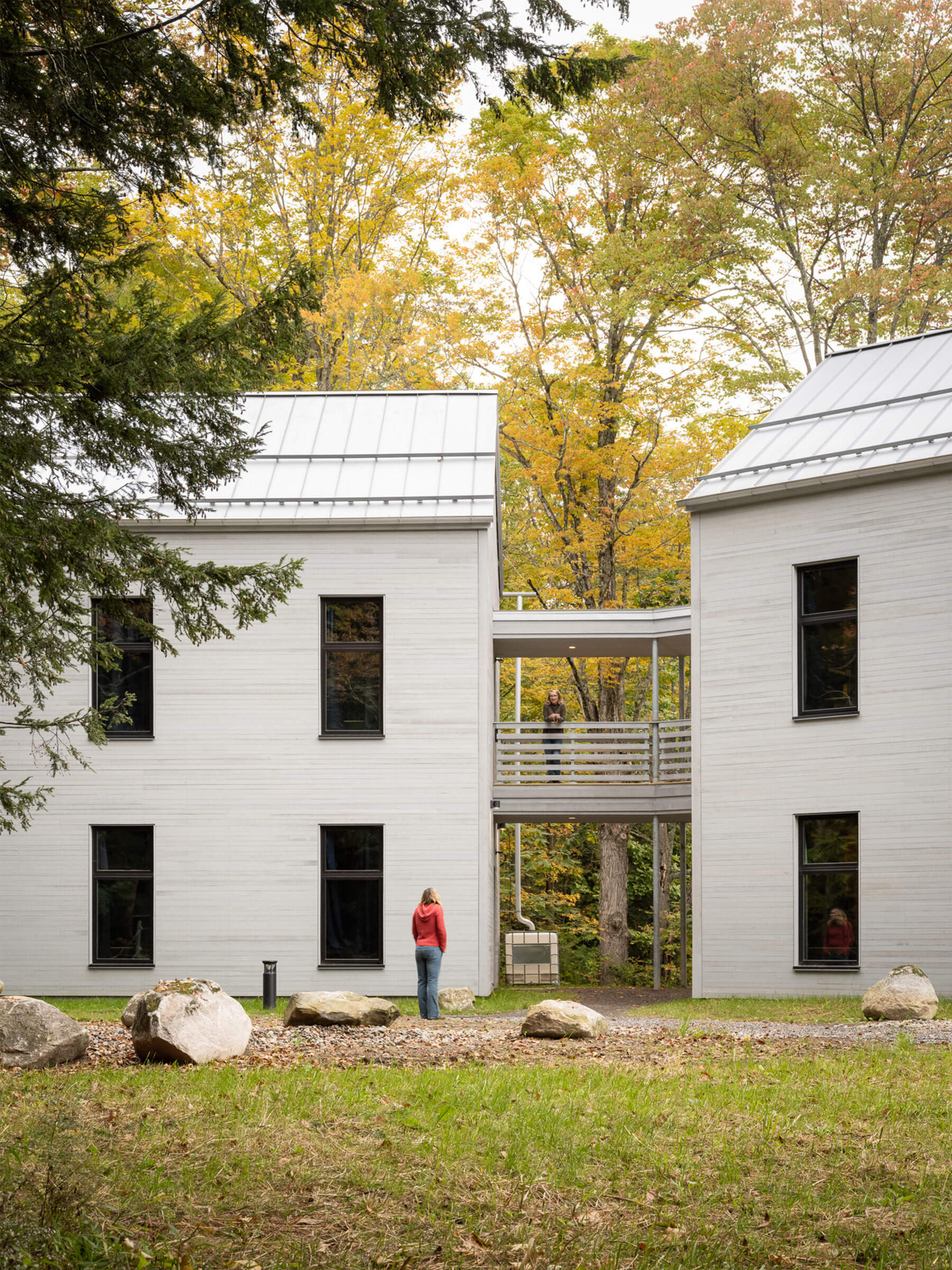
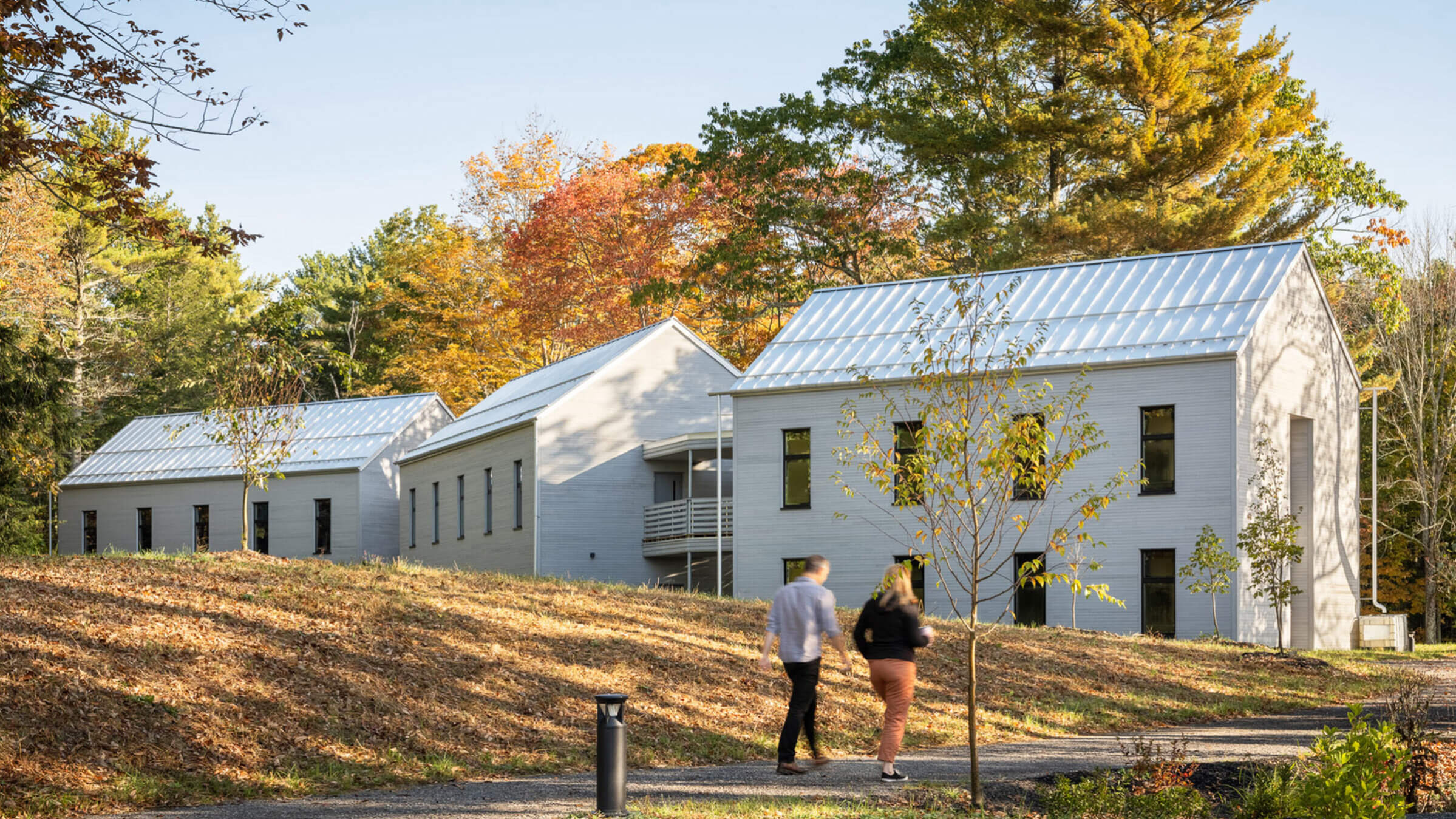
A Living Building Challenge School finds a new home in Saco to inspire generations of students to be stewards of the environment through science and immersive hands-on learning.
The Ecology School is an organization that runs educational programs for kids of varying ages. Their goal is to transform how they think about science, food, the environment, and themselves through joyful, hands-on learning.
When they secured their new property in Saco at Riverbend Farm, they needed a very conscientious team of designers to meet the challenge of their aspirations – to create a campus that embodies everything they stand for as stewards of the environment. They interviewed three prominent architects who are the foremost leaders in the world of sustainable design in Maine. They hired all of them!
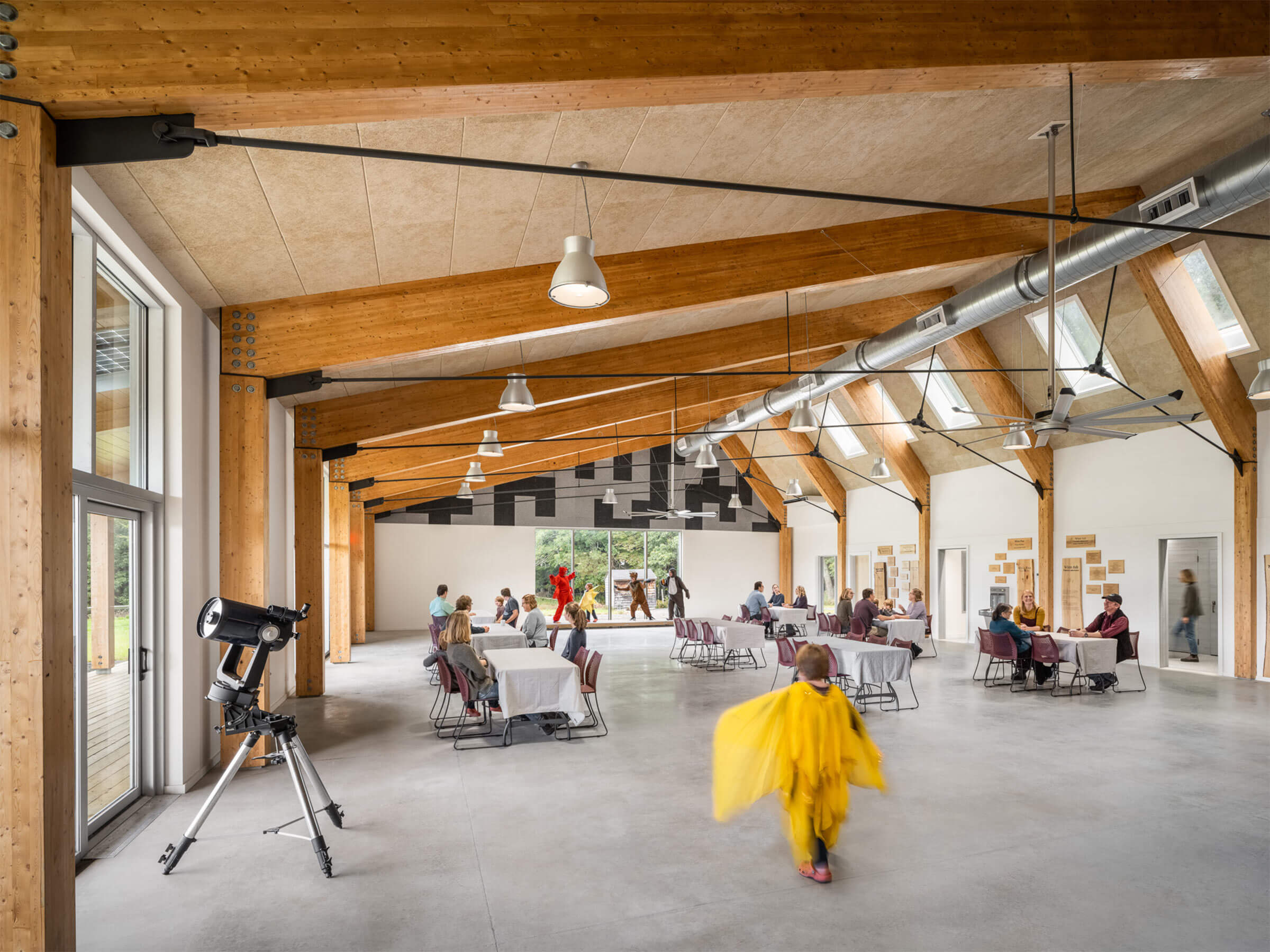
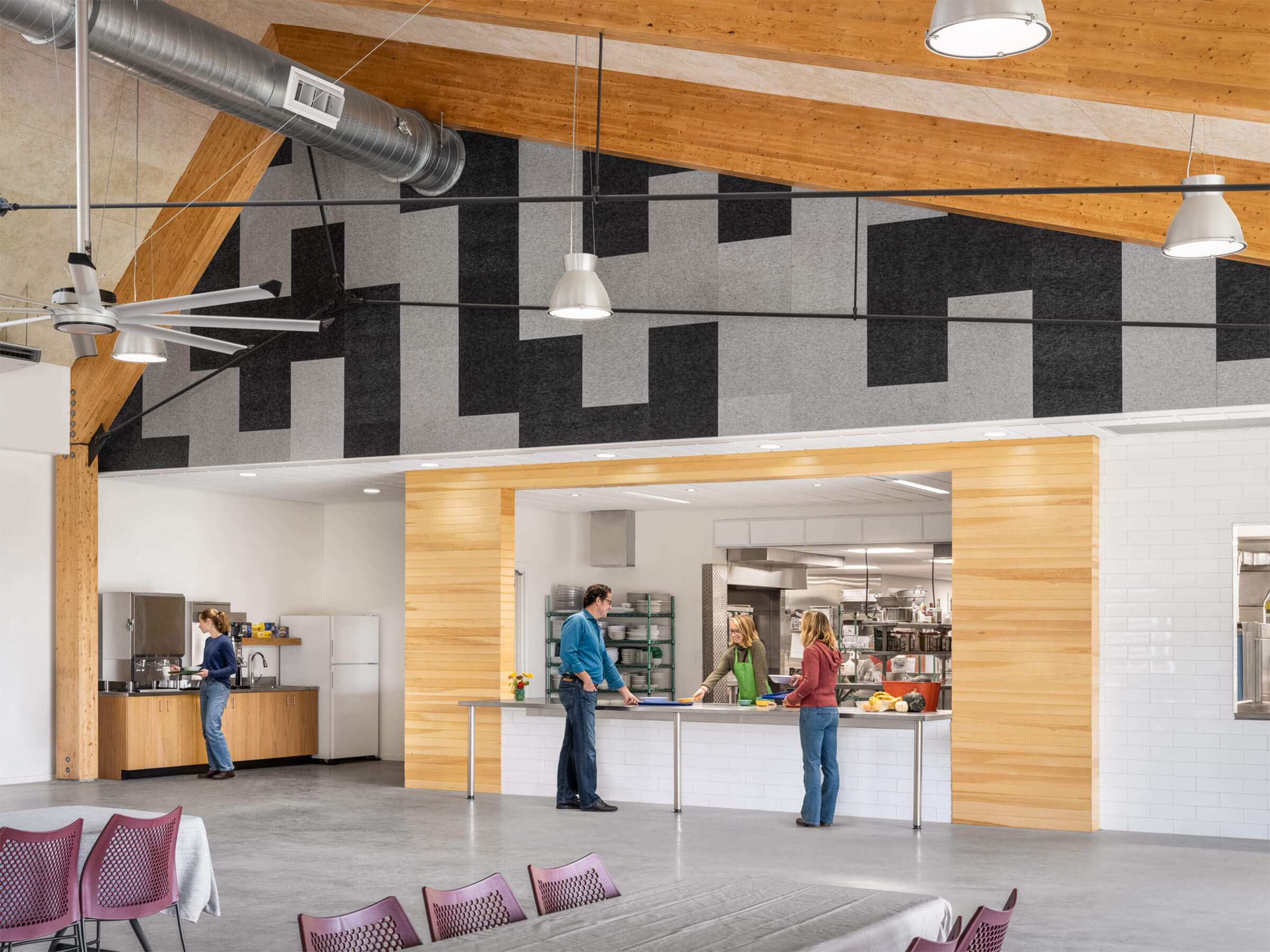
This may sound crazy, and it might be (just a little), but as nature thrives on diversity, so too does the built environment. It was thought that this “Ecology of Architecture” team could completely put their egos aside, share the workload, and put forward their best efforts together to create Maine’s most sustainable learning campus on their newly acquired property at Riverbend farm. They would meet the Living Building Challenge together, and instead of one architecture firm becoming an expert in executing Living Building Challenge projects, there would be THREE who would then share the knowledge they gained with the rest of the building industry at a rate three times faster. This reflects the Ecology School’s philosophy of sharing, promoting and spreading knowledge and passion for ecology conservation. Thus, Kaplan Thompson Architects became the principal architects (and architects of record) with Simons Architects as the design lead for the Commons building, and Briburn as the design lead for the Dormitory building and the energy modelers for the whole project.
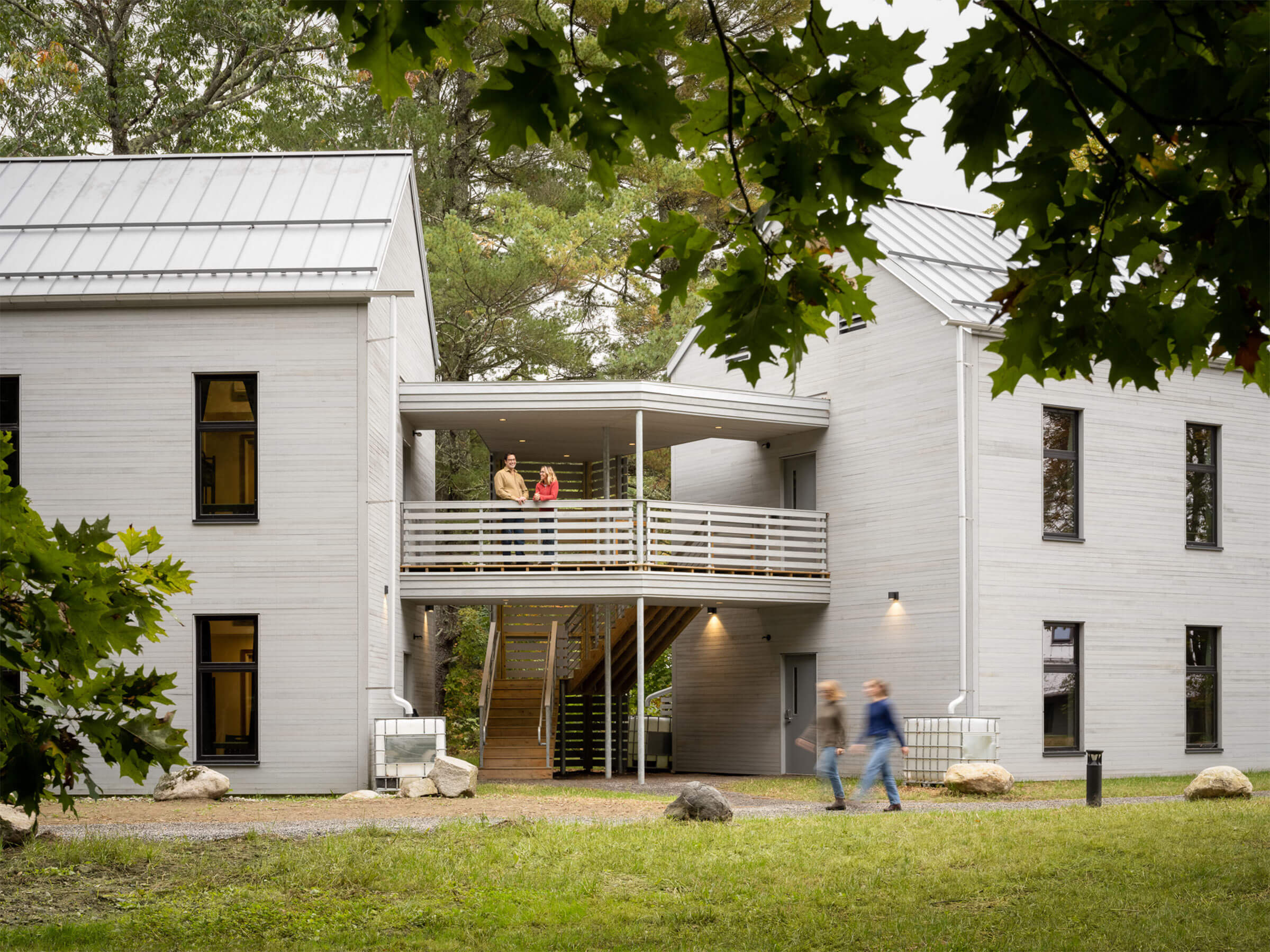
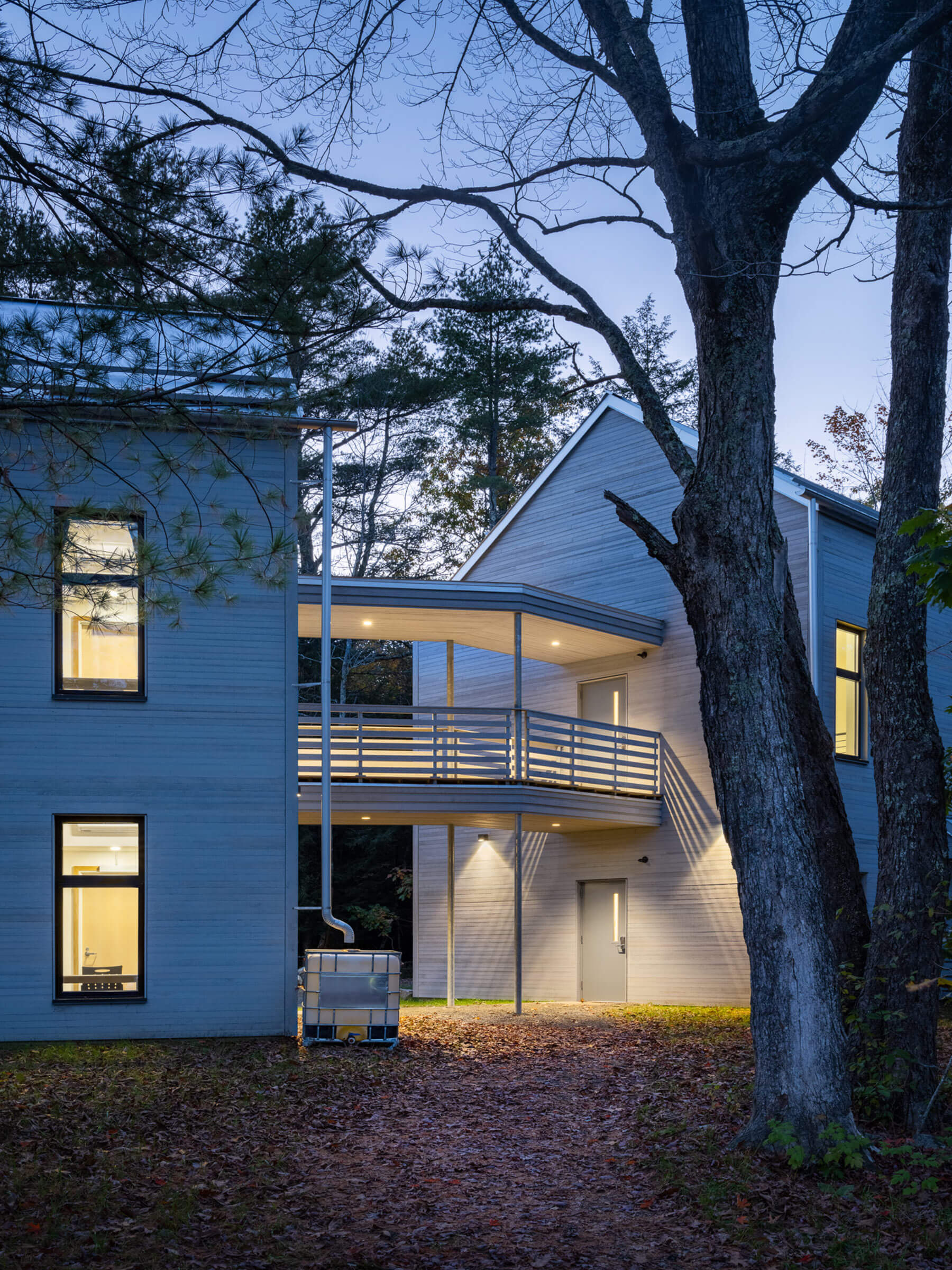
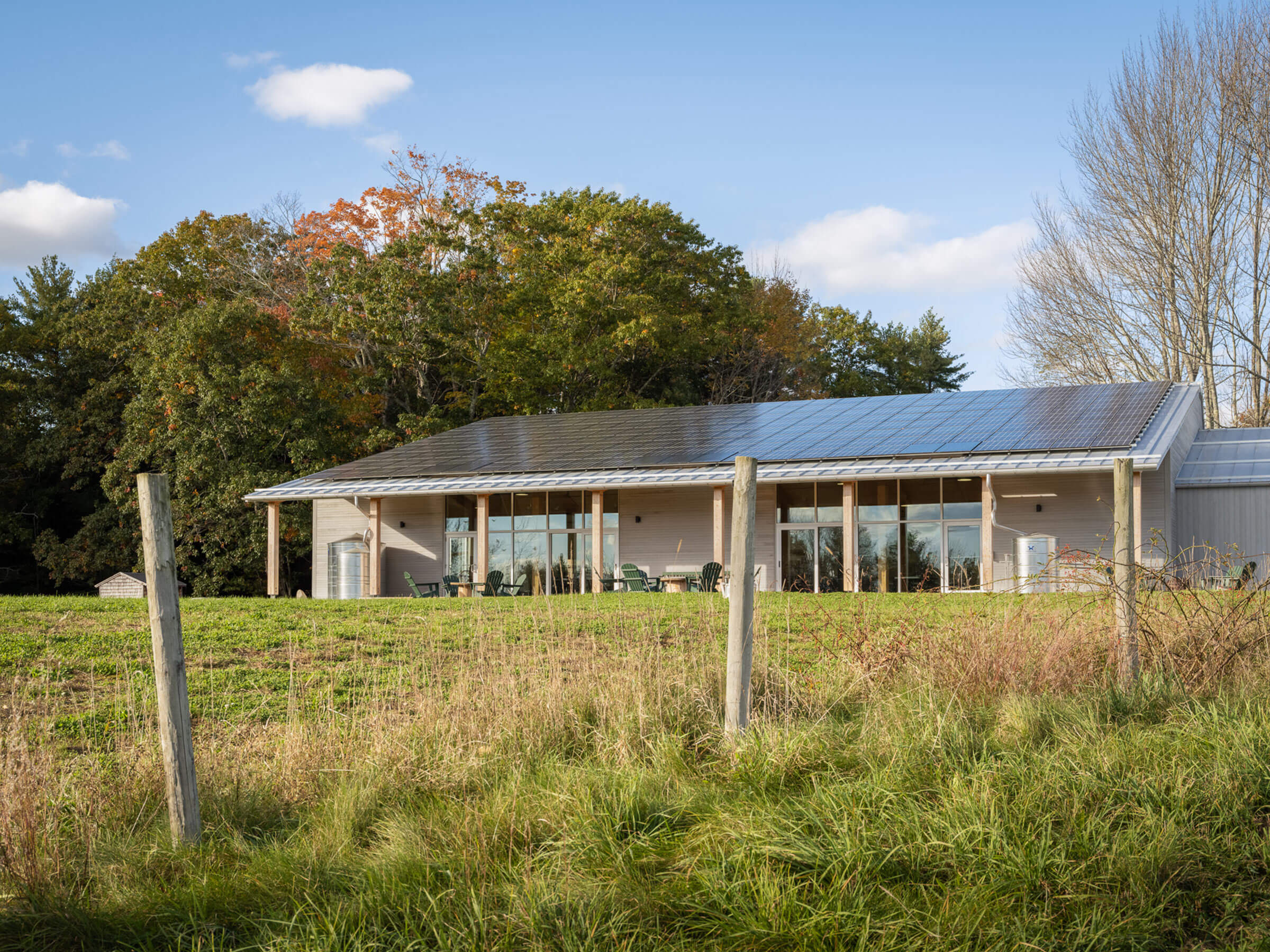
When it became clear that the solar panels for the project (712 of them) would be consolidated on the Commons roof and in a field-mounted array, the positioning and orientation of the Dormitory building became more flexible.The Dormitory was tucked along an old wind row (tree-line between agricultural fields) reserving the field to the west of the building for hands-on agricultural plots and edible landscaping while giving the occupants a sensation that they reside among the sheltering trees.
Read More- Specifications
- Achievements
Project Type
Institutional
Project Location
Saco, Maine
Project Year
2021
Project Size
9,000 sq. ft.
Design Team
Christopher Briley, Harry Hepburn, Ian Parlin (Alumnus), Hans Breaux (Alumnus)
Contractor
Zachau Construction
Partners/Consultants
Kaplan Thompson Architects, Simons Architects, Richardson & Associates | Landscape, Becker | Thornton Thomassetti
Photos
Trent Bell
Energy Use Intensity
0.0 What is EUI?
Energy use intensity (EUI) is an indicator of the energy efficiency of a building's design and/or operations. EUI can be thought of as the miles per gallon rating of the building industry.
It's calculated by dividing the total energy consumed by the building in one year (measured in kBtu or GJ) by the total gross floor area of the building (measured in square feet or square meters).
Certifications



Awards
- 2022 Maine AIA Honor Award
- 2022 Rethinking the Future Award – Sustainable Project of the year
- Environmental Ally of the Year Award 2018
Press