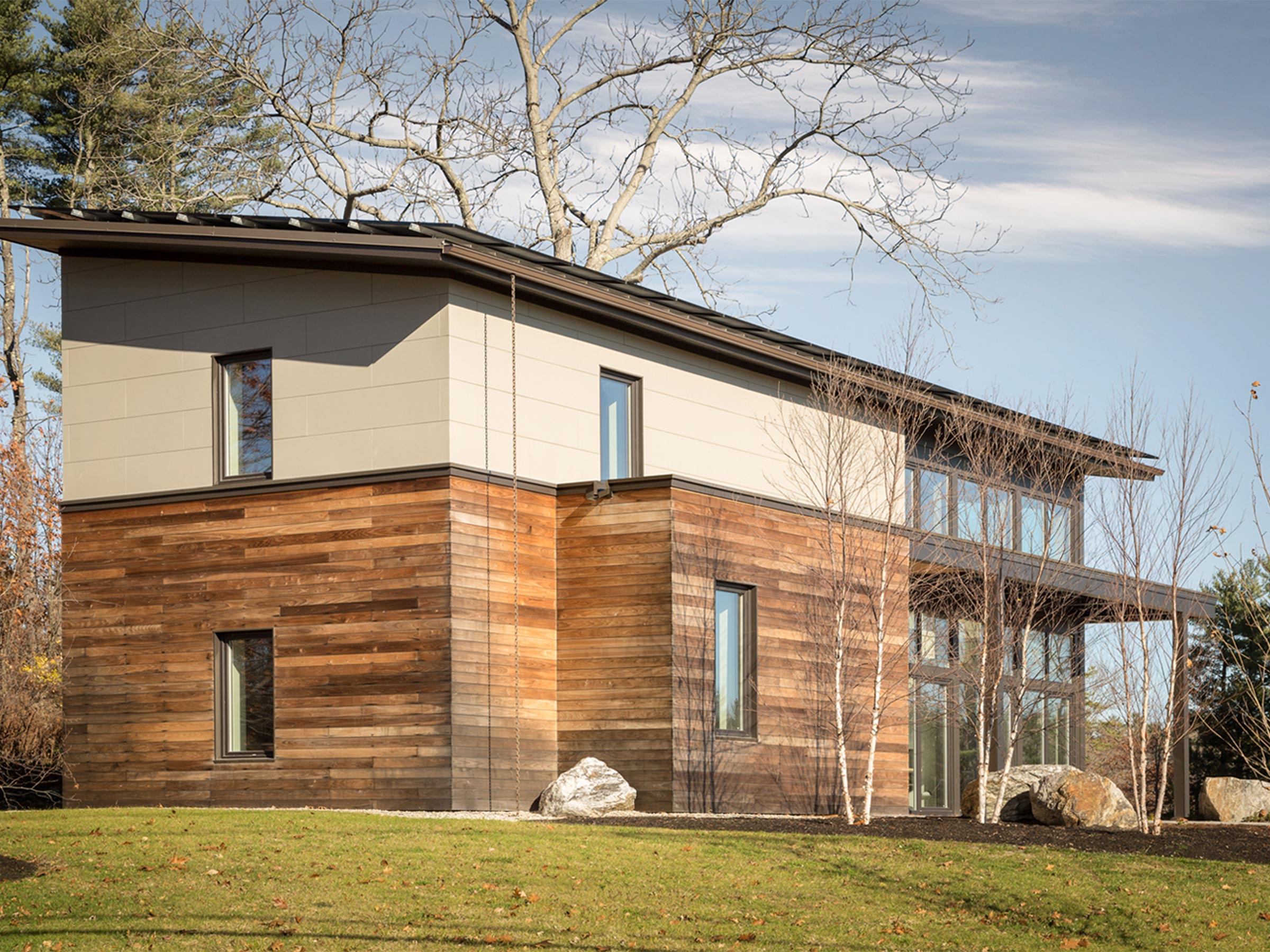

Viridescent Passive House
- Passive House PHIUS+
- Net Positive
Maine’s First Net Positive Passive House
TideSmart Global is an experiential marketing company in Falmouth, Maine that is committed to investing in the future of its employees, its community, and the sustainability of the natural environment. When it came time to replace a small residential structure on their campus, they wanted a new building that would meet the highest of energy efficiency standards (Passive House) and serve as an example for the building industry in Maine and beyond.
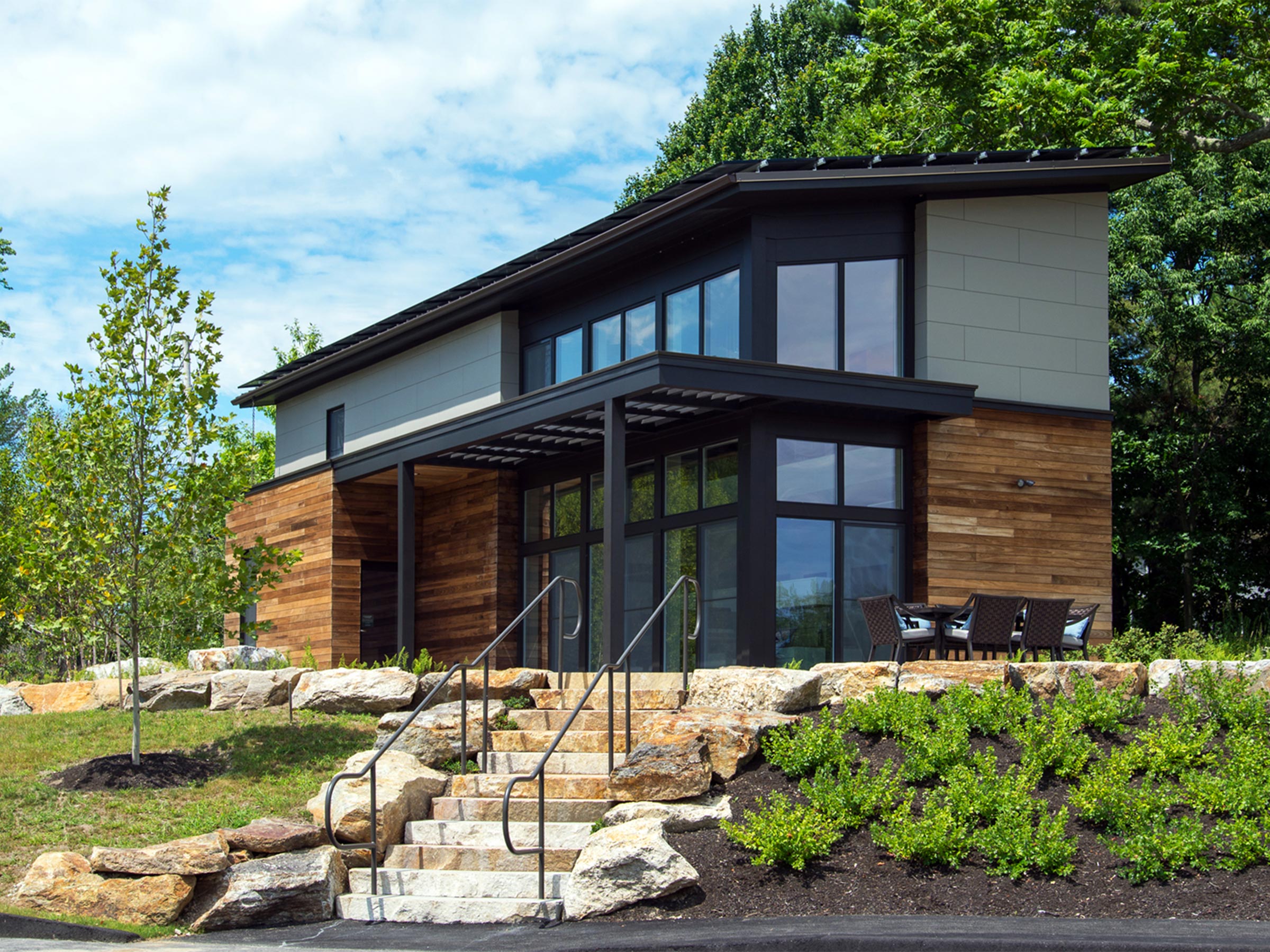
The result is a certified Passive House that generates far more than twice the energy it consumes, making it significantly net positive with zero emissions. This is achieved by dramatically reducing the building’s energy demand and installing copious amounts of renewable energy in the form of a 19.4 kW solar array that occupies the entire roof. This “extra” power is used to power a vehicle charging station (that is free for public use) and to offset power consumed by other existing buildings on TideSmart’s campus.
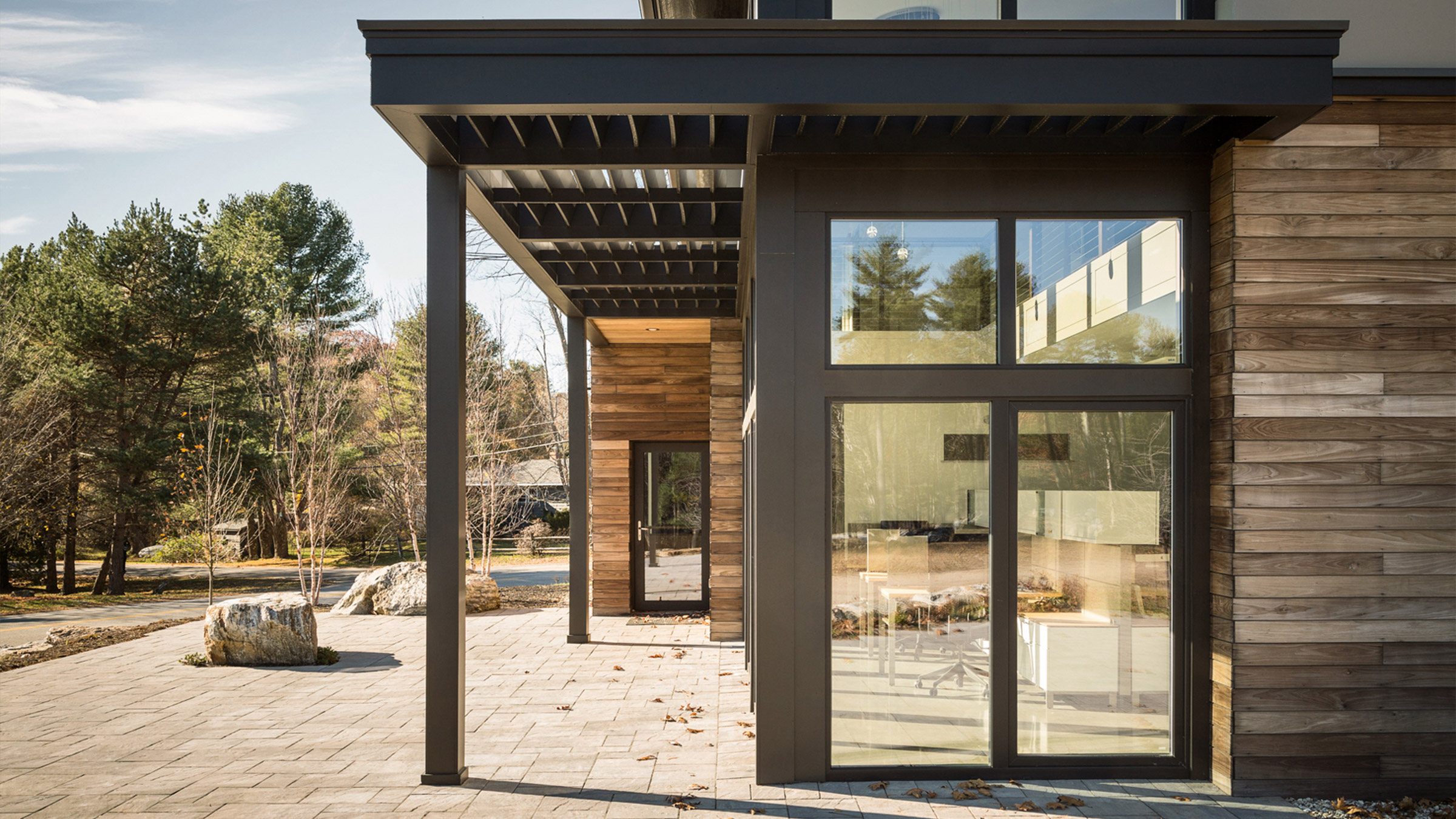
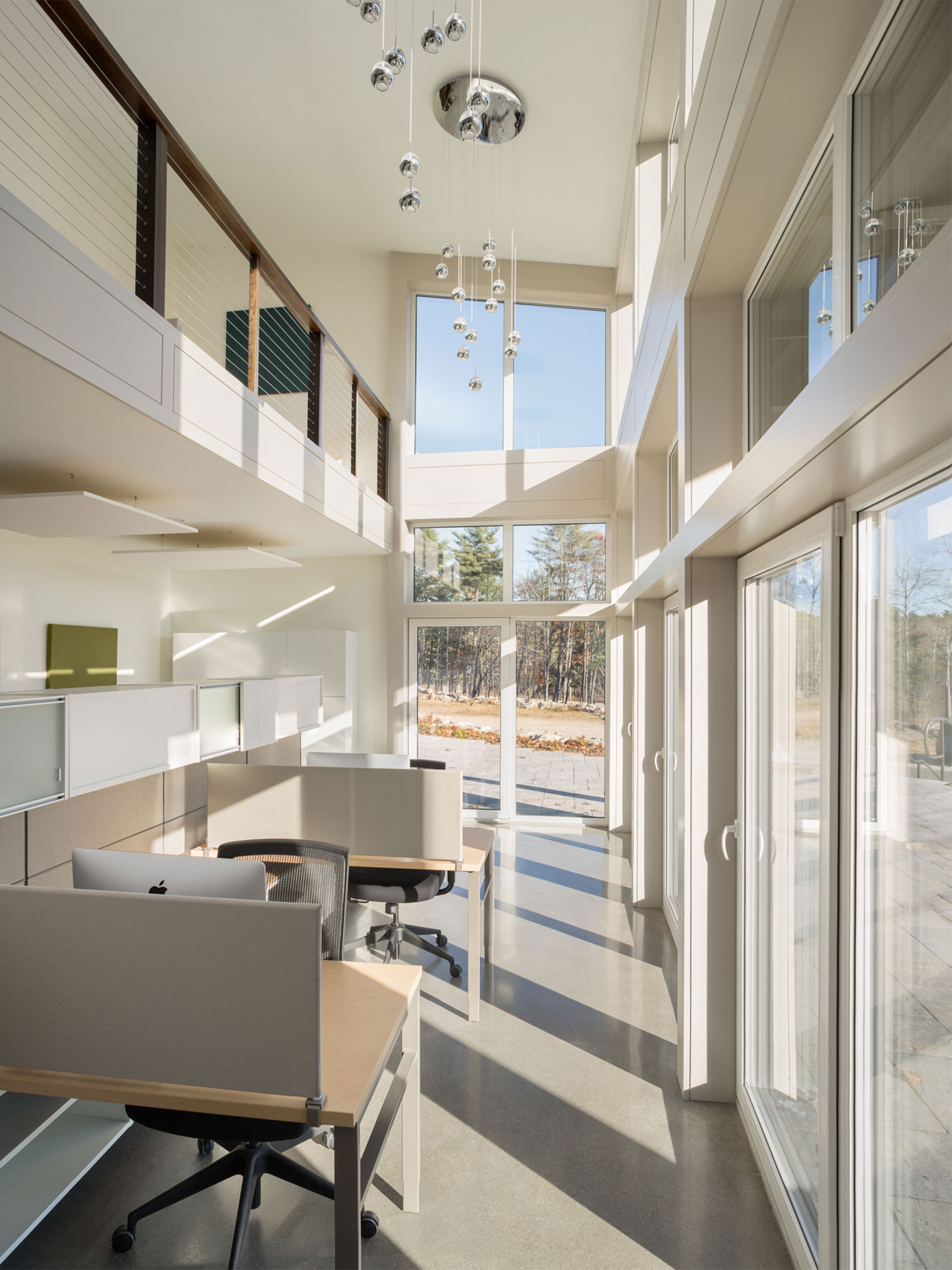
Viridescent’s design is founded on passive solar design principles, orienting the building and configuring the fenestration to maximize solar heat gain in the winter and minimize it in the summer. It features a highly insulated and tightly-sealed exterior thermal envelope consisting of vapor-open Larsen truss walls (20” thick filled with dense-packed cellulose), a frost protected slab (8” of polished concrete over 10” of EPS insulation), European triple pane tilt turn windows, and detailed connections that are tenaciously sealed and thermally isolated from the exterior. It also features resource efficient, highly durable, low emitting materials, LED lighting, water efficient fixtures, an energy monitoring system.
Read More- Specifications
- Achievements
Project Type
Residential + Commercial
Project Location
Falmouth Foreside, Maine
Project Year
2016
Project Size
1,914 sq. ft.
Design Team
Christopher Briley
Contractor
R&G Bilodeau Carpentry and Electric
Partners/Consultants
Landscape Architect: Cowels Design Studio, Structural Engineering: L&L Engineering, Solar: Revision Energy, PHIUS Rater: Horizon Maine, Interiors: Birkbeck Design
Photos
Trent Bell, Cory Templeton
Energy Use Intensity
9.4 What is EUI?
Energy use intensity (EUI) is an indicator of the energy efficiency of a building's design and/or operations. EUI can be thought of as the miles per gallon rating of the building industry.
It's calculated by dividing the total energy consumed by the building in one year (measured in kBtu or GJ) by the total gross floor area of the building (measured in square feet or square meters).
Certifications

Awards
- PHIUS 2016 Honor Award
Press