West End Garden House
- Net Zero Ready
- Historic Neighborhood
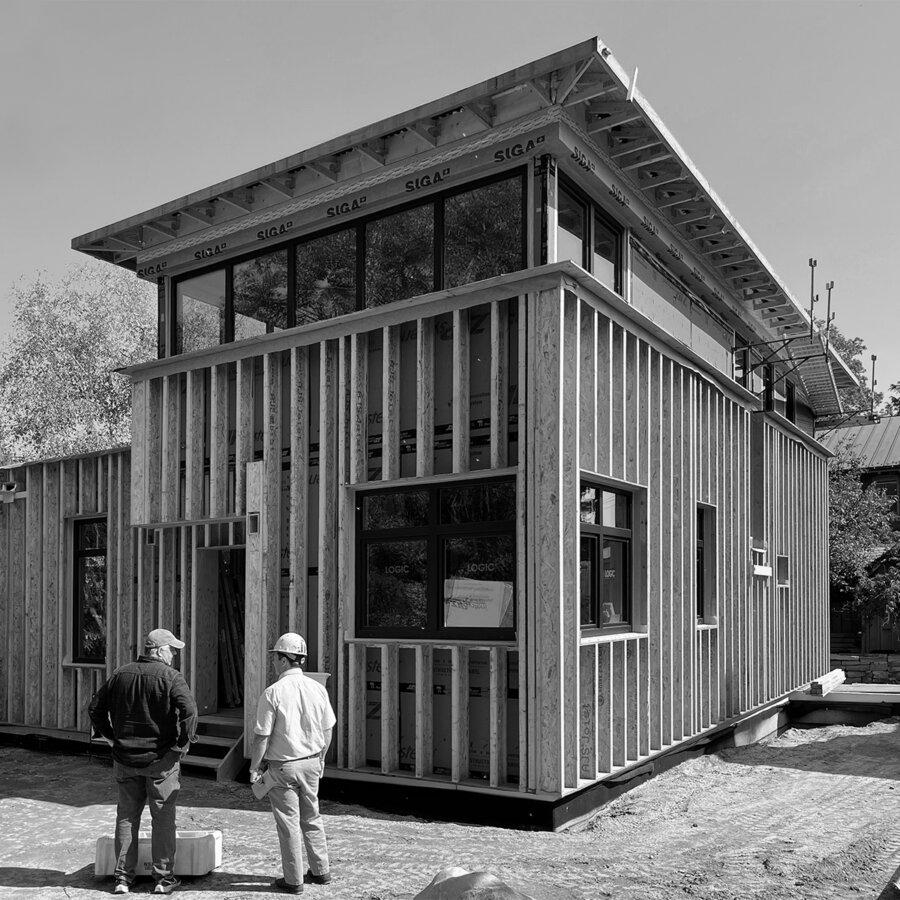
- Larson Truss Assembly
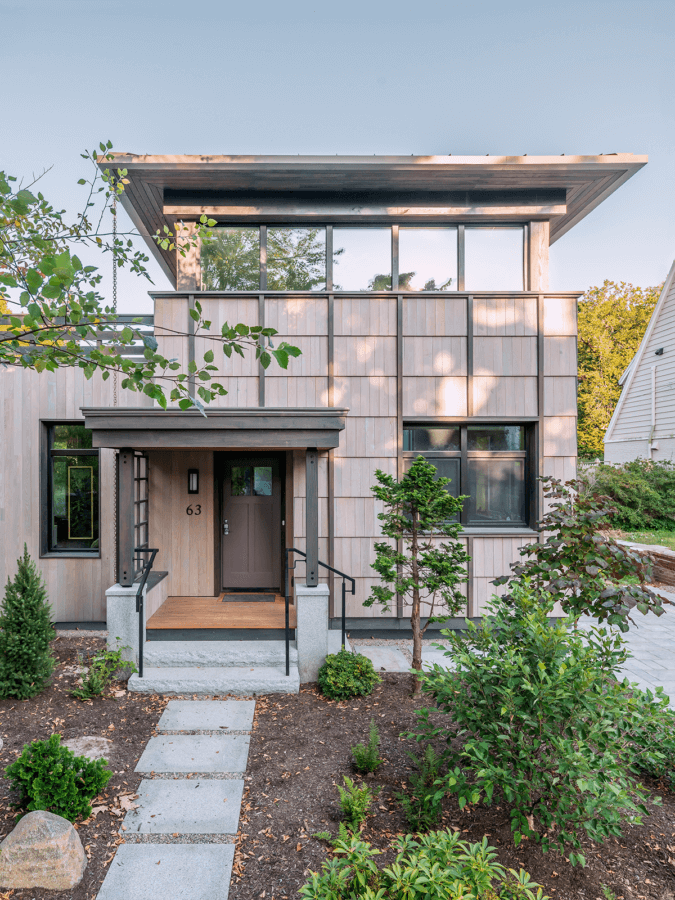
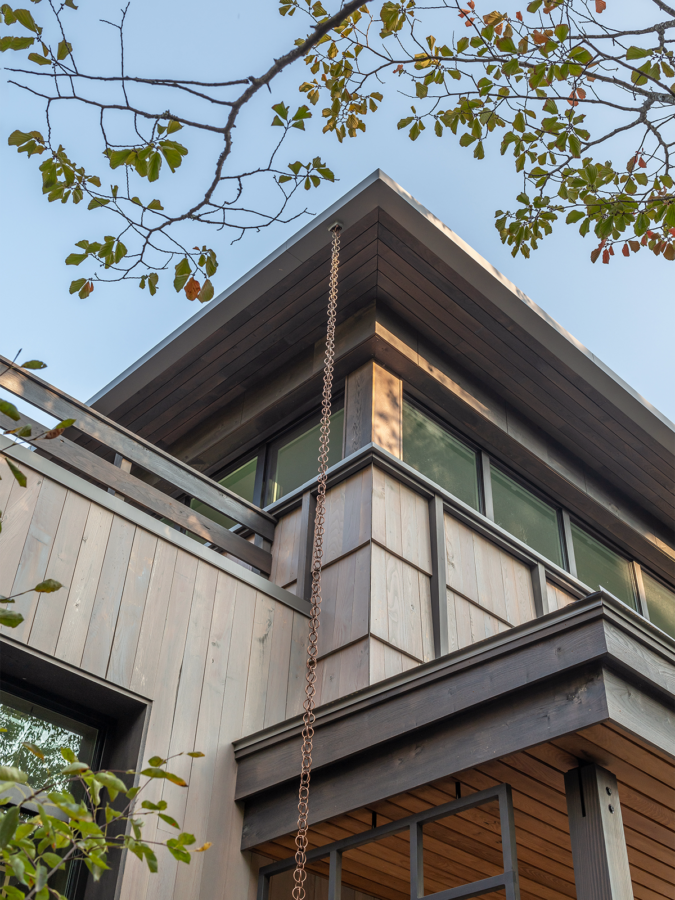
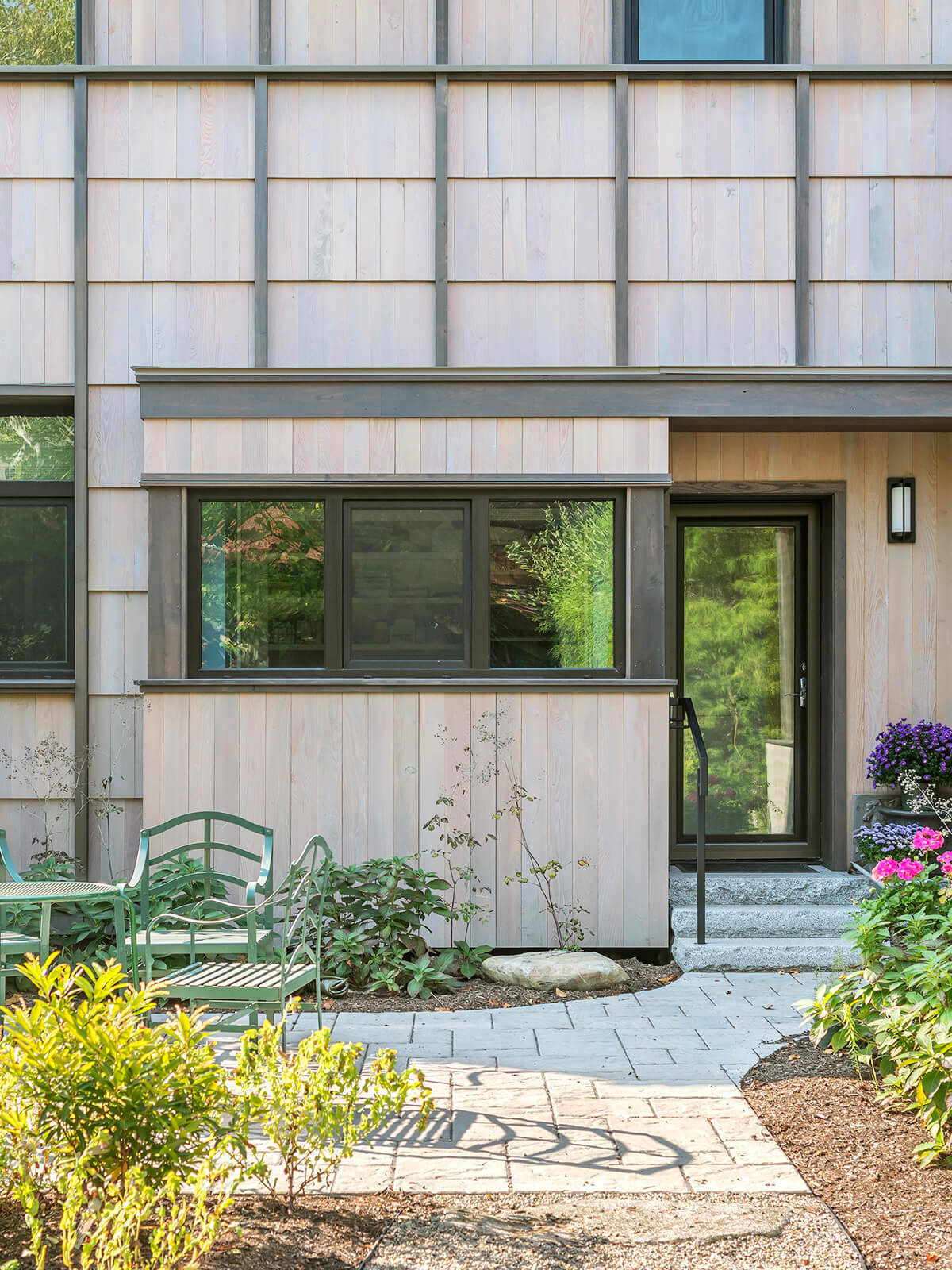
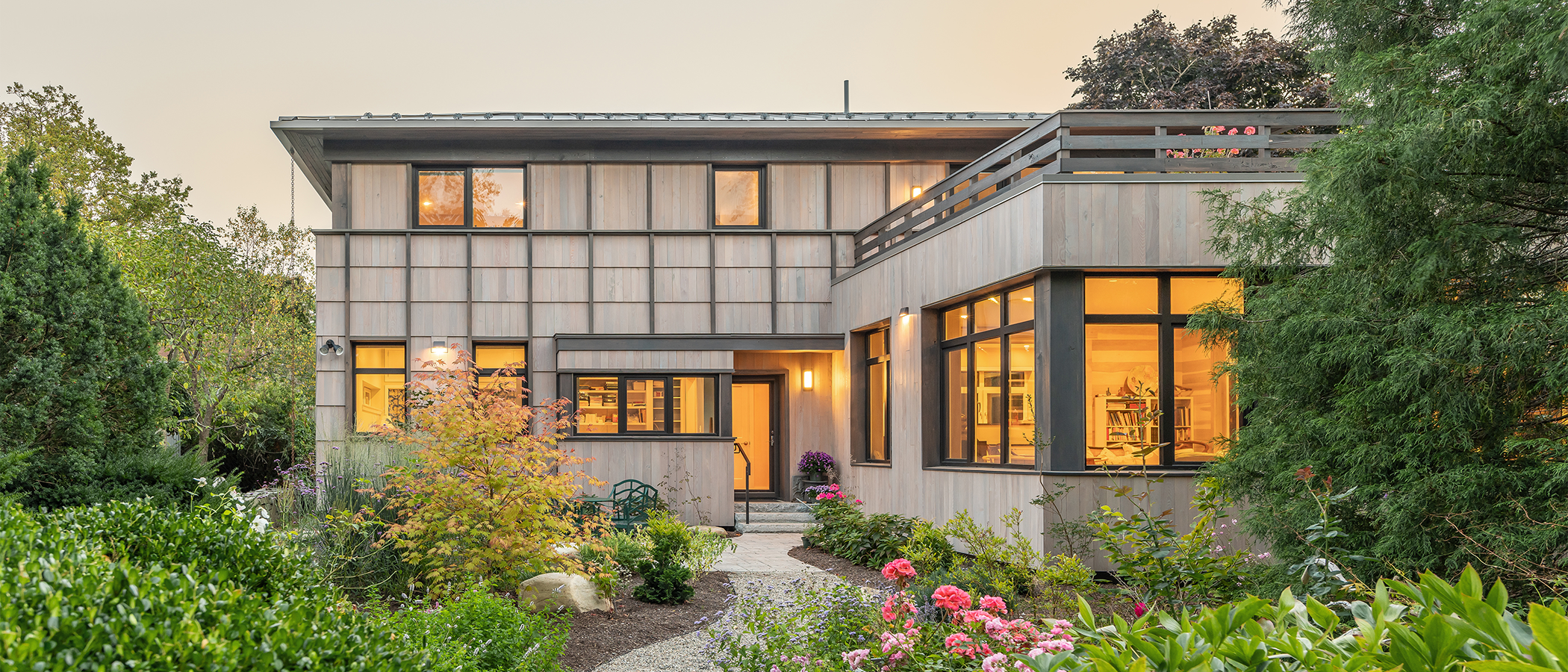
An energy-efficient home in the historic West End Neighborhood of Portland, Maine finds its identity through creative construction details and keen gardening skills.
Ground-up residential projects often start with a blank slate — a vacant lot or a quiet patch of woodland. However, this house, situated in Portland’s historic West End, began its journey on an existing garden plot. Nestled within one of Maine’s oldest and most cherished neighborhoods, this verdant oasis provided a unique and inspiring foundation for the project.
When the owners first approached us to design a house here, we knew it was important to get it right. The garden had been well-maintained for decades and was now a visual staple of the neighborhood. It provided a natural respite for pedestrians navigating the dense, suburban fabric of the West End. Plus, it was beautiful. The garden was an unavoidable contextual feature, one that would influence our design strategy from the start.
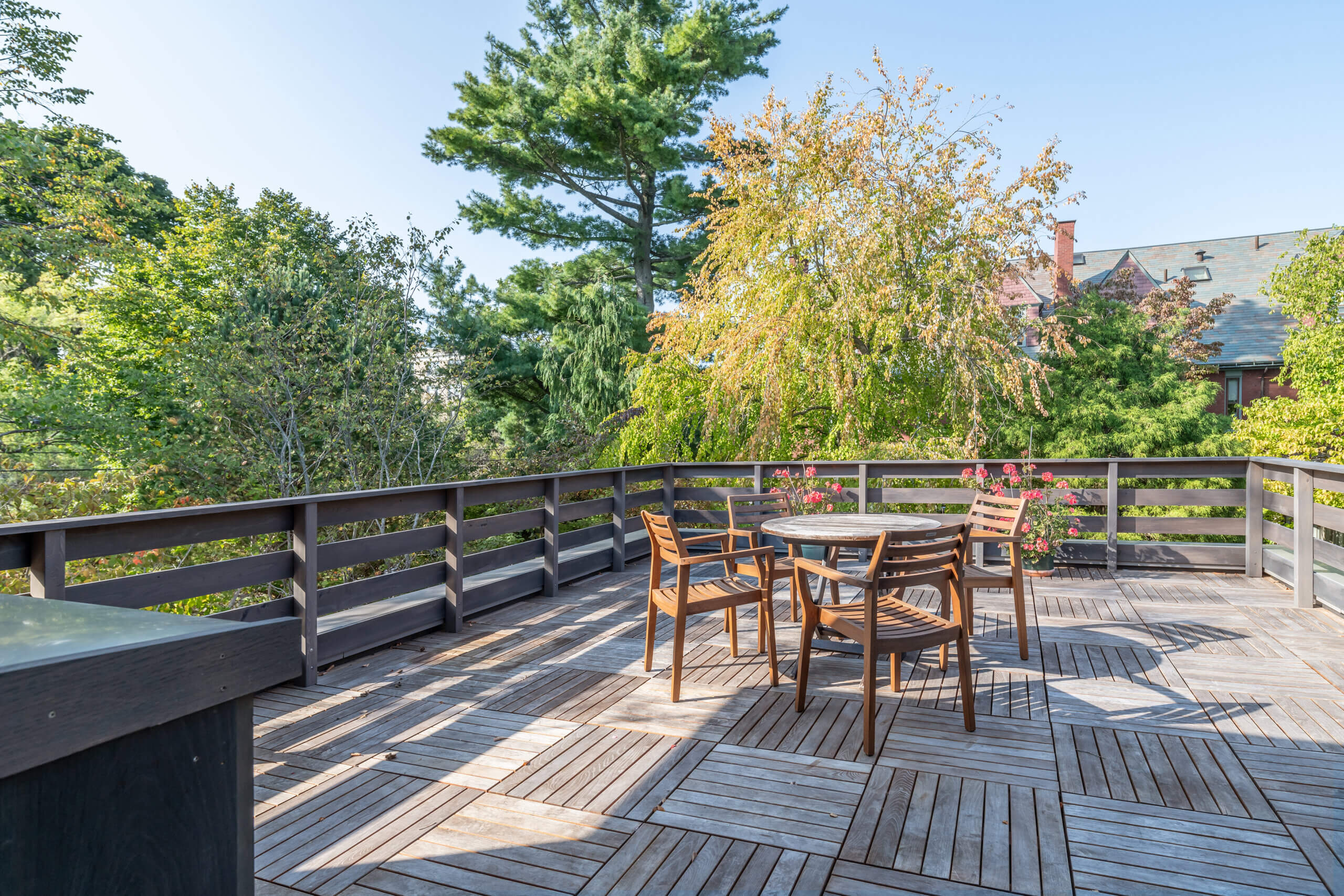
Going forward, the main objective was to design a house that remained in dialogue with its surrounding landscape. We began by locating the house on the southwestern end of the lot. This preserved as much vegetation as possible while also forming a central patio space that gave a direct, landscaped connection to the owner’s existing home nearby (occupied by extended family). Next, we worked closely with the owner to minimize the building footprint and increase green space. These two opening design moves were simple, yet fundamental to the project’s successful integration with the garden.
Read More- Specifications
- Achievements
Project Type
Residential
Project Location
Portland, ME
Project Year
2024
Project Size
2566 sf (includes basement)
Design Team
Chris Briley & Samuel Day
Contractor
Wright-Ryan Construction
Partners/Consultants
L + L Structural Engineering
Photos
Francois Gagne
Energy Use Intensity
16.4 What is EUI?
Energy use intensity (EUI) is an indicator of the energy efficiency of a building's design and/or operations. EUI can be thought of as the miles per gallon rating of the building industry.
It's calculated by dividing the total energy consumed by the building in one year (measured in kBtu or GJ) by the total gross floor area of the building (measured in square feet or square meters).